London School of Economics
Helping communicate Gypsy and Traveller experiences in the criminal justice system to influence policymakers and practitioners.
Story Fox | Visual Research Communication


Helping communicate Gypsy and Traveller experiences in the criminal justice system to influence policymakers and practitioners.
Story Fox | Visual Research Communication

Challenge:
Critical research on systemic inequalities affecting Gypsy and Traveller communities in the criminal justice system was locked in unread academic reports without policy and public reach

Solution:
Worked with the research team to distil findings into a visual narrative that balanced accuracy, sensitivity, and accessibility

Results:
Accessed 1300 times, making research accessible to non-academic audiences for the first time, and supporting policy and practice engagement
"We have found Nifty Fox a great service and will recommend your work widely."
Professor Zoe James - University of Plymouth
The LSE research team had produced important evidence on how Gypsy and Traveller communities experience systemic disadvantage within the criminal justice system — barriers, prejudice, and gaps in provision that have real consequences for people’s lives. But the evidence was trapped in formats that only reached other academics.
This wasn’t a straightforward communication challenge. The subject matter is sensitive, the communities involved are often misrepresented in public discourse, and oversimplification risked doing more harm than good. Reducing systemic injustice to a few statistics disrespects the very experiences the research seeks to centre.
We began by working closely with the research team to understand not just the findings, but the ethical considerations around how they should be represented. Which aspects were most important for non-academic audiences? Where was the risk of misinterpretation highest? How could visual representation support rather than undermine the communities the research was about?
Rather than creating a standard research summary with key findings pulled out, we developed a visual narrative that told the human story in a structured sequence. The systemic nature of the inequalities means isolated statistics can be misleading. The narrative format ensures readers encounter the evidence in context, understanding why the system produces these outcomes, not just what the outcomes are.
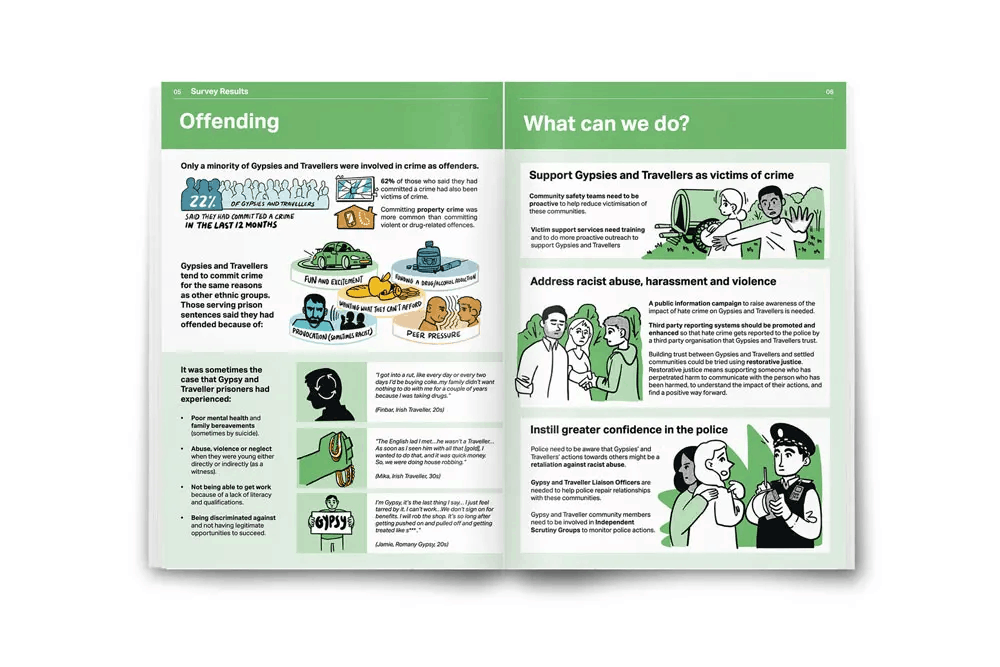
The illustrations were created to reflect real experiences without sensationalising them. We used a visual style that centred dignity and humanity, avoiding the deficit-framing that often characterises communication about marginalised communities. Every design decision was checked against the research team’s knowledge of how these communities are typically represented — and where those representations cause harm.
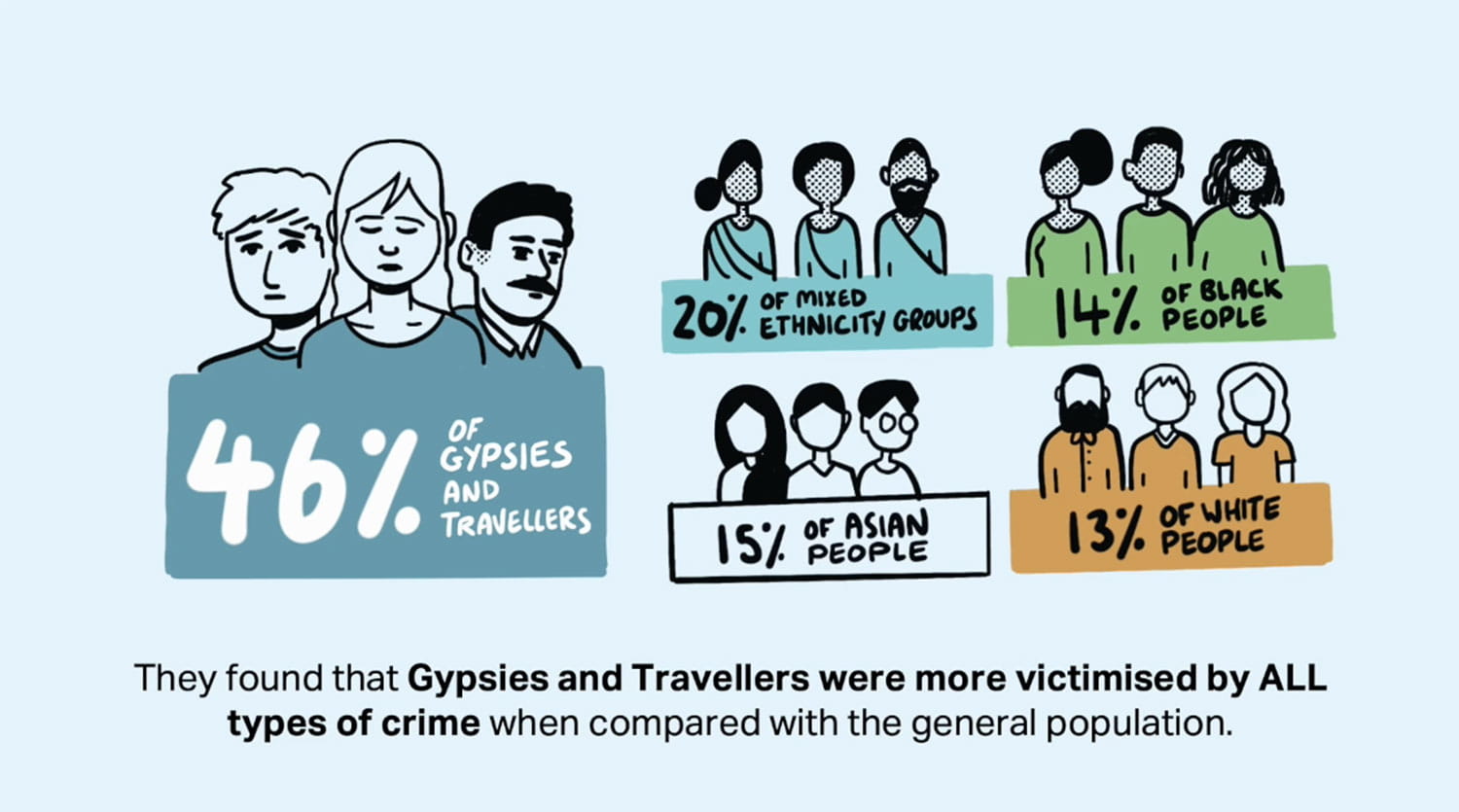
This research has outputs that can travel beyond journal articles and conference presentations.
Research on inequality, marginalisation, and lived experience carries particular communication responsibilities. Getting it wrong doesn’t just mean the message is unclear — it can reinforce the very harms the research documents. If your work involves sensitive findings about communities who are often misrepresented, the visual approach needs to be as carefully considered as the research methodology itself.
We help research teams make difficult findings accessible without losing the nuance that makes them meaningful.