Mobilise-D
Helping Mobilise-D improve the lives of those with long-term health conditions by changing how mobility is measured across Europe.
Motion Fox | Animation, Infographic & Interactive

Helping Mobilise-D improve the lives of those with long-term health conditions by changing how mobility is measured across Europe.
Motion Fox | Animation, Infographic & Interactive

Challenge:
A major piece of research had redefined walking as more than a physical act — but the insight needed to reach clinicians, policymakers, and regulators in a way that could change how mobility is measured

Solution:
Co-created an animation, print infographic, and interactive infographic with embedded patient audio, working with the research team and international patient contributors

Results:
Research disseminated across multiple audiences to support regulatory and clinical uptake of digital mobility outcomes
"The animation is great! The finished product will be shared widely and across various different target audiences. The video highlights a seminal piece of work for our project, so it was important to get the message out there beyond scientific publications. The crew at Nifty Fox guided us at each step to consider what we needed, the key message we wanted to send, and how we would visually represent that."
Dr Alison Keogh - Principal Investigator, Mobilise-D
Mobility is one of the clearest indicators of health. When people with long-term conditions like Parkinson’s disease, multiple sclerosis, COPD, or recovery from a hip fracture lose mobility, it signals disease progression and predicts outcomes like hospitalisation, falls, and mortality. But until recently, clinicians measured mobility using one-off tests in a clinic — a 15-minute window once a year that tells you almost nothing about how someone really moves through their day.
The Mobilise-D consortium had just completed a seminal piece of research that went further than developing new measurement tools. They’d reframed the definition of walking itself. Walking isn’t just a physical act. It’s also a social experience, an emotional experience, and an economic one. Where you walk, who you walk with, whether you feel safe walking, whether you can walk to the shops or to see your grandchildren — all of this is walking, and all of it matters for health.
It had the potential to change how clinicians measure mobility across Europe, how regulators assess drug interventions, and how healthcare systems think about what “recovery” actually means for people with long-term conditions. But a redefinition this fundamental needed to land with multiple audiences: policymakers who decide what gets funded, regulators who decide what counts as valid clinical evidence, clinicians who apply measurement in practice, and patients whose experience the research was trying to centre. A journal article alone wasn’t going to move all those audiences.
We worked closely with the Mobilise-D research team and patient and public contributors from around the world to co-create a suite of outputs that could carry this redefinition into the conversations where it mattered.
The research itself was the insight. Our job was to make sure the emotional, social, and economic dimensions of walking came through as clearly as the clinical science. That meant the outputs couldn’t feel like standard research dissemination. They had to reflect the lived experience the new definition was built on.
We co-created the scripts and voiceovers with patient contributors, not just researchers. Real patients from across Europe shaped the language, the stories, and the tone. This was essential because one of the biggest risks with a redefinition like this is that it stays in academic language and loses the very human experience it was trying to capture. If we’d just described walking as “social, emotional, and economic” in abstract terms, we’d have reproduced the exact problem the research was trying to solve.
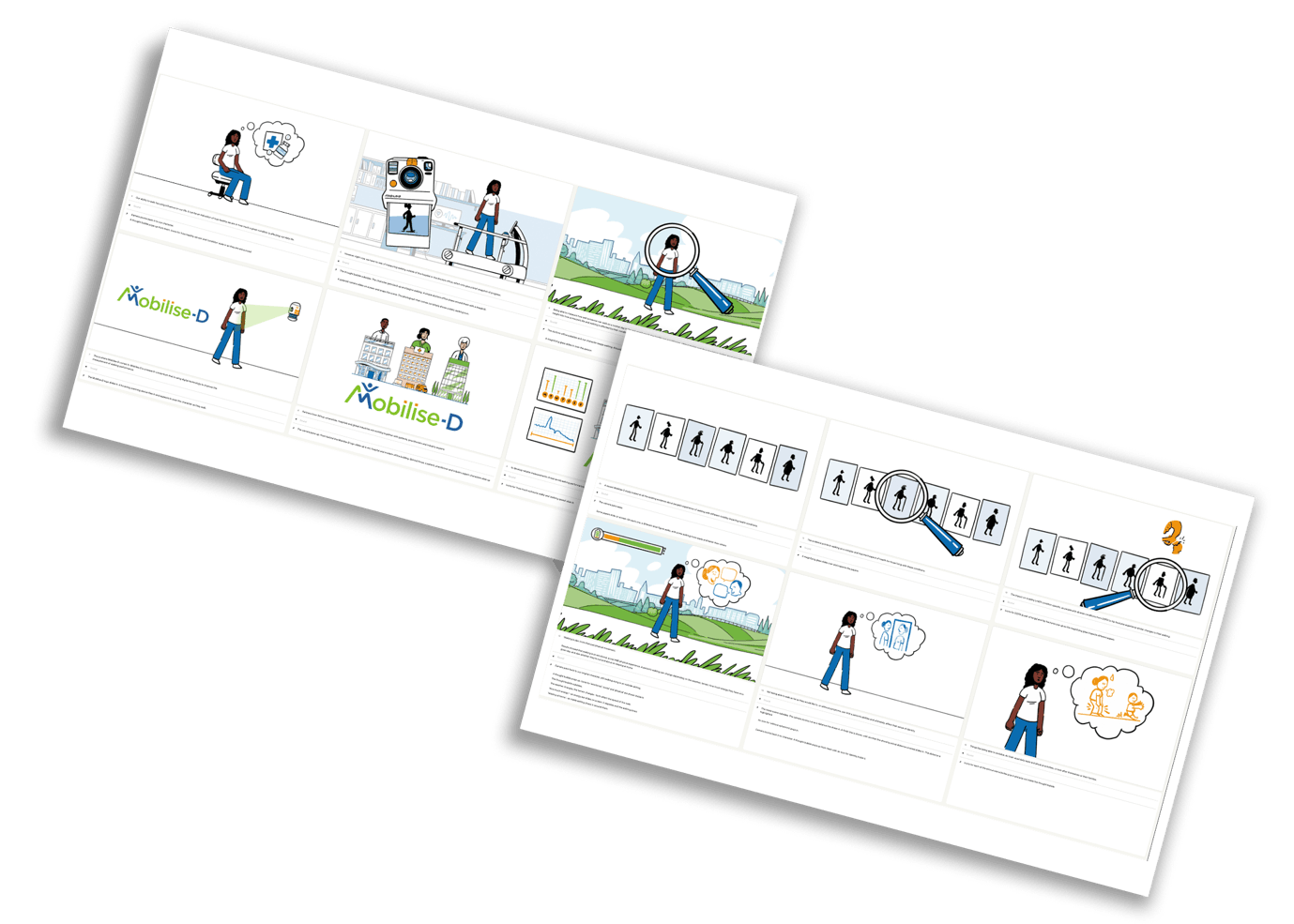
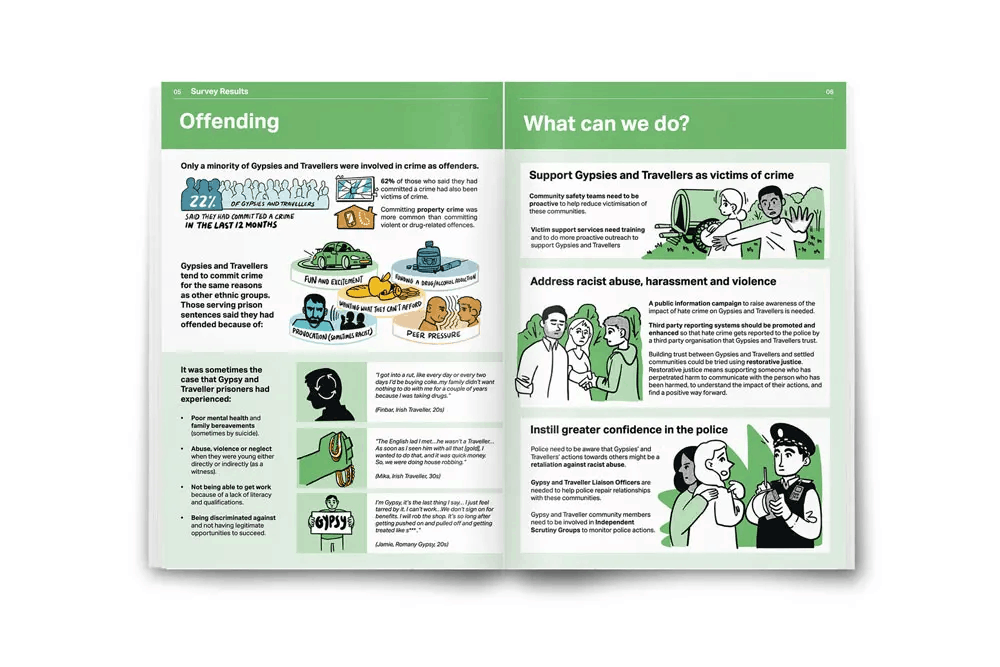
We produced three complementary outputs designed to work together. An animation told the core story of why walking is more than physical and why that matters for how mobility should be measured — built to travel, shareable with policymakers, clinicians, and patient groups alike. A print infographic gave clinicians and researchers a reference they could keep, share at conferences, and use in presentations — distilling the research into a visual summary that worked without the animation alongside it. And an interactive infographic with embedded audio stories from real patients allowed viewers to explore the research at their own pace, and to hear directly from people living with long-term conditions about what walking actually means to them.
The audio element was the part that made the research feel irreducibly human. Across all three formats, we maintained a consistent visual and narrative language so they reinforced each other rather than fragmenting the message.
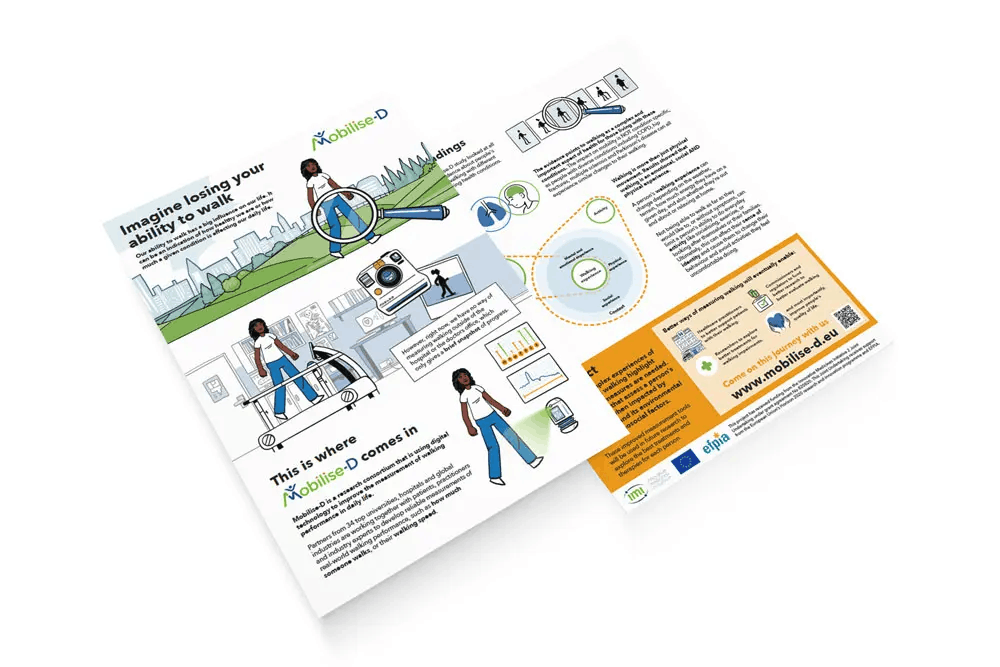
The outputs supported Mobilise-D’s dissemination across clinical, policy, and regulatory audiences in Europe.
If your research reframes something fundamental — a definition, a category, an assumption the field has been working with for years — the hardest part is ensuring the new framing actually reaches and changes the people who need to apply it. That requires outputs built for different audiences, co-created with the people whose experience the research is about, and designed to travel across the conversations where the old framing is still dominant.
We help research teams translate significant findings into outputs that reach clinicians, policymakers, regulators, and the public — together.