NIHR – KNOW-PH
Helping NIHR KNOW-PH make housing and health evidence usable in local government decision-making.
Info Fox | Interactive Infographic

Helping NIHR KNOW-PH make housing and health evidence usable in local government decision-making.
Info Fox | Interactive Infographic

Challenge:
Local authority leaders needed to make evidence-informed housing decisions but couldn’t navigate dense research outputs under time pressure.

Solution:
Co-designed an interactive infographic using our Critical Inking methodology, restructuring evidence around local authority priorities and real human stories rather than academic themes

Results:
638 uses, 3 local authorities using the tool, national template, NIHR best practice recognition.
"Working collaboratively with Nifty Fox has been a positive team experience with lots of shared insights across our respective teams. Nifty have more than delivered what we needed in a pragmatic engaging way, enabling us to use demonstrate genuine impact with broad organisations and communities"
Dr Fiona Marshall - KNOW-PH Team
The KNOW-PH programme identified a huge body of evidence linking housing conditions to health, social, and economic outcomes. But the people who needed that evidence most —local authority leaders making daily decisions about housing policy — couldn’t access it in a useful way.
The research existed in academic papers and lengthy reports (see the table of doom!). Local authority teams didn’t have time to read them, couldn’t easily see which findings were relevant to their area, and had no structured way to move from evidence to action. Housing decisions were being made without the full picture, and research funding wasn’t translating into the policy change it was designed to support.
We ran co-design workshops with both the research team and local authority professionals using our Critical Inking methodology. This surfaced three specific barriers: the evidence wasn’t structured around local authority priorities, it wasn’t presented in language decision-makers use, and there was no mechanism for local teams to see themselves in the data.
That diagnosis told us a PDF summary wouldn’t work. The tool needed to be navigable by priority area, locally relevant, and fast.
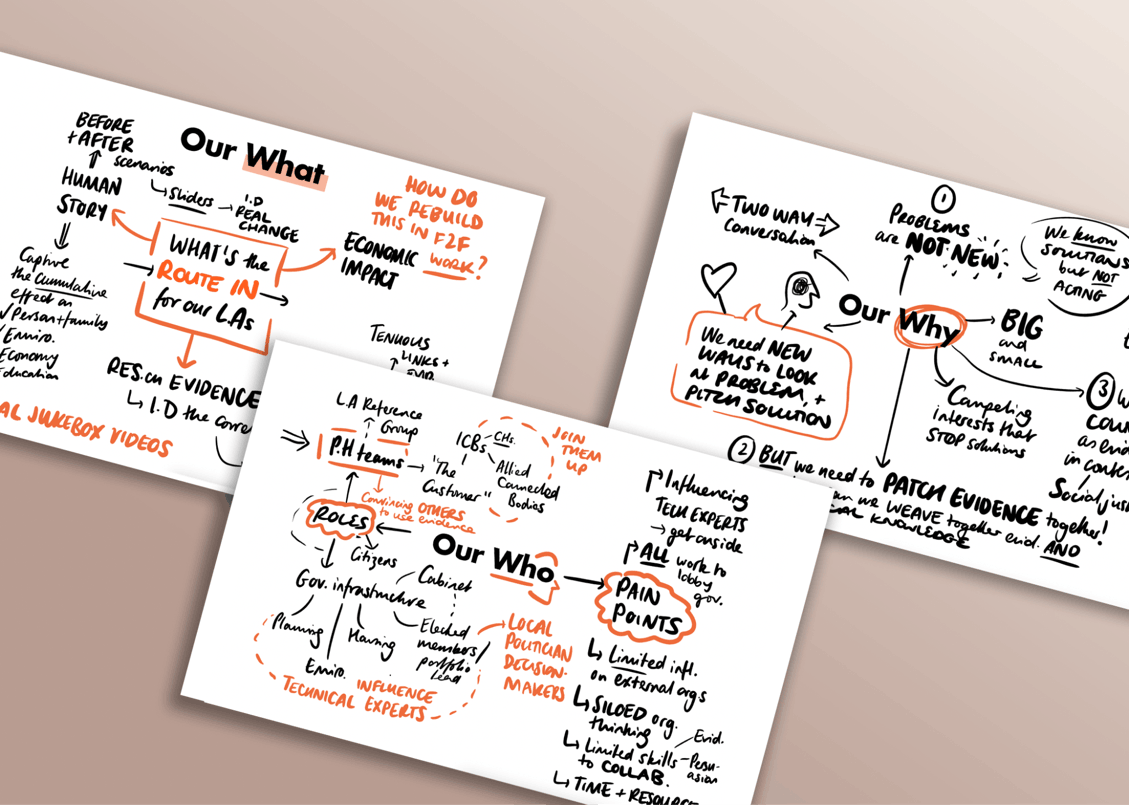
Working with the research team, we reorganised findings away from academic themes and towards the six housing priorities local authorities actually work against: housing and well-being, housing standards, supported tenancies, housing insecurity, downsizing and rehousing, and energy efficiency. We distilled the evidence under each priority into clear statements a housing lead could take into a meeting — not summaries of papers, but actionable insights. We also developed evidence-informed human stories and characters to demonstrate the human impact of housing conditions; giving the real life ‘so what’ behind the evidence.
We built an interactive infographic in Genially designed to be usable in minutes. A local authority officer can select their priority area, understand the human impact, see the relevant evidence, and determine the implications without reading a full report. We sketch-prototyped with local authority teams before final design, testing whether it genuinely changed how they engaged with the evidence.
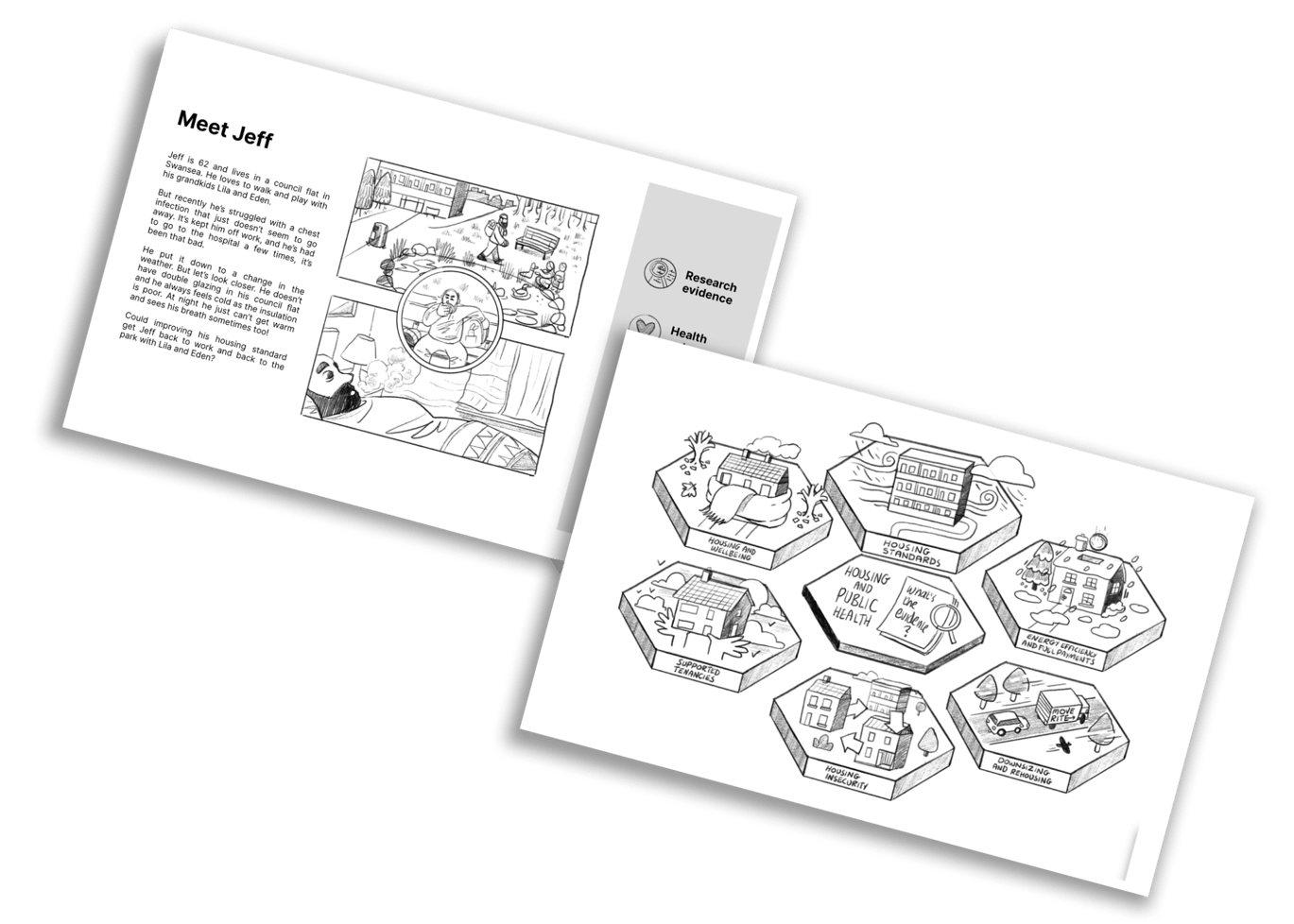
After successful trials with three local authorities, we developed the tool into a scalable template that can be adapted for other regions and evidence bases. KNOW-PH’s approach isn’t a one-off — it’s a reusable model for making public health research accessible to policy-makers nationally.
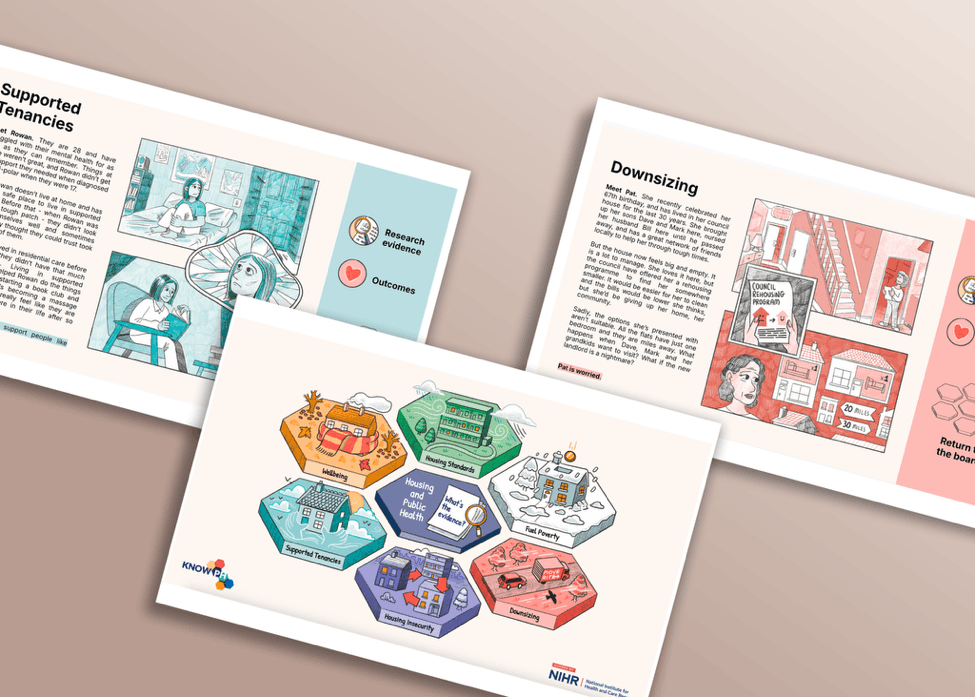
This project changed how the KNOW-PH team engages with local government. Instead of presenting research and hoping it lands, they now have a tool that puts evidence directly into the decision-making process.
If your research team has strong evidence but limited traction with the practitioners or policy-makers who need it, the problem isn’t the research itself. It’s how the evidence is structured, presented, and navigated in practice. That’s where we can help.
We help research teams turn evidence into tools that people actually use in decision-making.