Project Snapshot

An icon of a tick inside of a box

Challenge:

The Holistic Needs Assessment tool existed and was valuable, but uptake was challenging - cancer patients weren’t engaging with it or didn’t understand how it connected to their mental wellbeing

An icon of a lightbulb inside of a box

Solution:

Facilitated 4 co-design sessions with 40 stakeholders across 4 sites over 18 months, then co-created a suite of resources with patient voices at the centre

An icon of a exclamation mark inside of a box

Results:

Resources in national use, HNA question updated according to patient voice, won a King’s Impact Award, funded extension to other disease pathways

Dr Clair Le Boutillier - KCL

The Problem

Cancer doesn’t just affect your body — it affects your mental health too. But while cancer services in the UK are generally strong at managing the physical side of treatment, the psychological support has historically been weaker. The Holistic Needs Assessment (HNA) tool was designed to close that gap, helping clinicians identify the mental health needs cancer patients have alongside their physical ones.

The problem was that the HNA wasn’t being used as much as it should. Patients weren’t always aware the HNA existed, didn’t understand what it was for, or didn’t see how it connected to their mental wellbeing alongside their physical treatment. Without better communications, a valuable clinical tool was being underused by the people it was designed to help.

Researchers from King’s College London, Macmillan Cancer Support, four NHS Trusts, and patient advocates recognised the gap. They didn’t just need better leaflets. They needed communications that genuinely spoke to cancer patients about mental health in a way that would drive engagement with the HNA and the support it could unlock. That meant co-design at a scale and depth that most communications projects don’t attempt.

Our Approach

This was a genuine co-production project, not a consultation with design attached. Over 18 months, we facilitated four co-design sessions with 40 stakeholders across four NHS sites — researchers, clinicians, Macmillan staff, and, most importantly, cancer patients themselves.

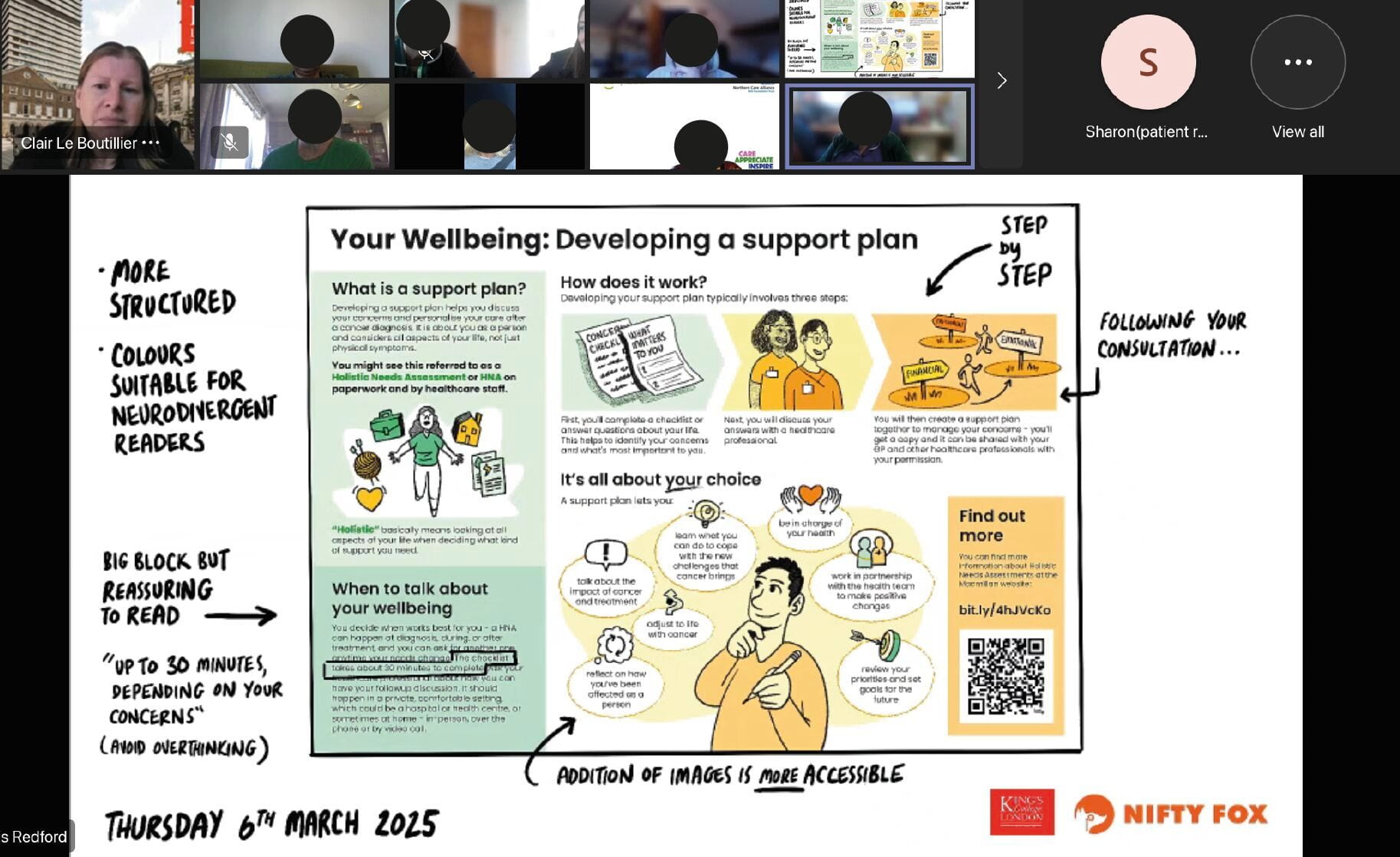
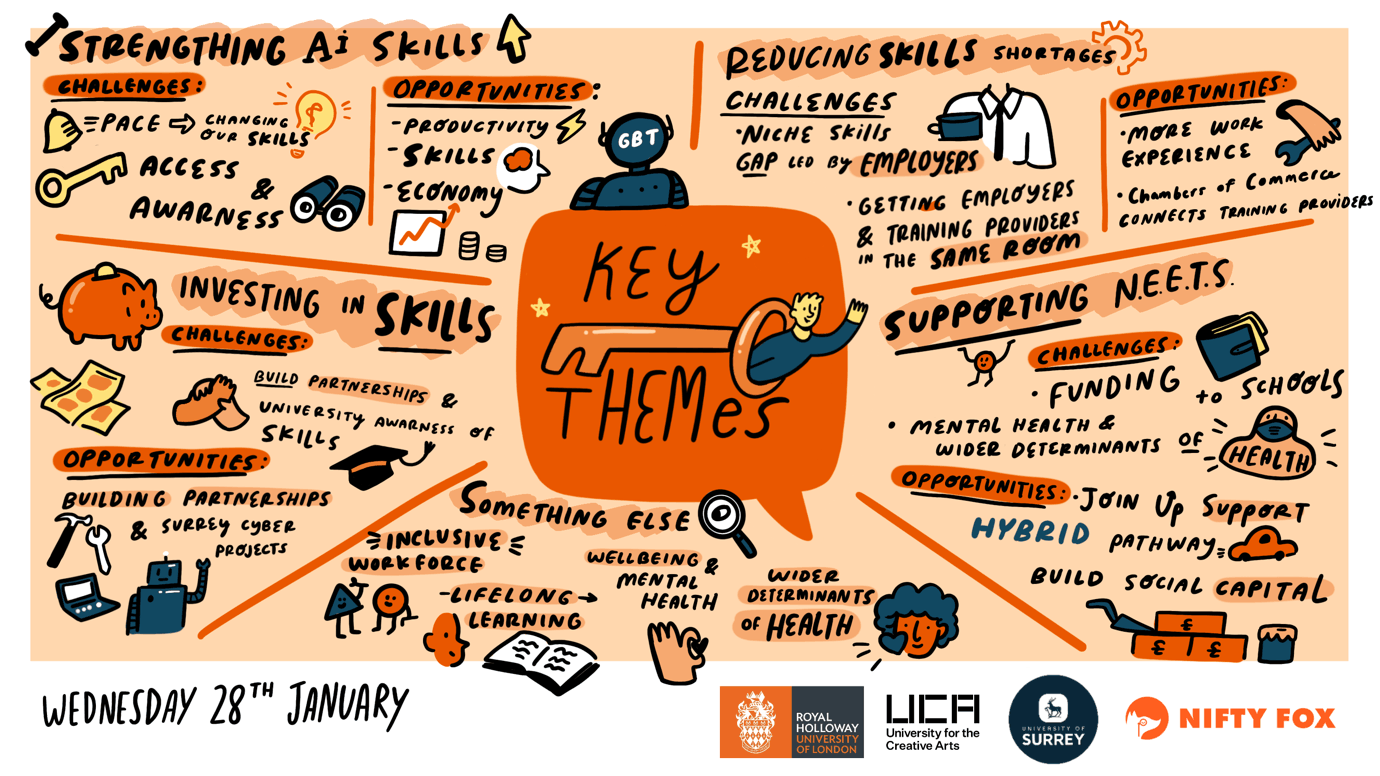
The sessions weren’t about picking between options we’d already designed. They were about understanding what was working, what wasn’t working, and what was missing from existing HNA communications — from the perspective of the people who were meant to use them. We used live scribing throughout to keep everyone aligned in real time, capture emerging ideas visually, and make sure patient voices were recorded and reflected in the materials we developed afterwards.

An image from a meeting for this project.

The patients in the room told us what mental health support should feel like when you’re going through cancer, what questions they wished the HNA had asked them, what language put them off, and what would have made them feel seen rather than processed. All of that went directly into the resources we created.

Helping King’s College London, Macmillan, and four NHS Trusts co-design new mental health resources for colorectal cancer patients — now adopted nationwide and recognised with a King’s Impact Award.

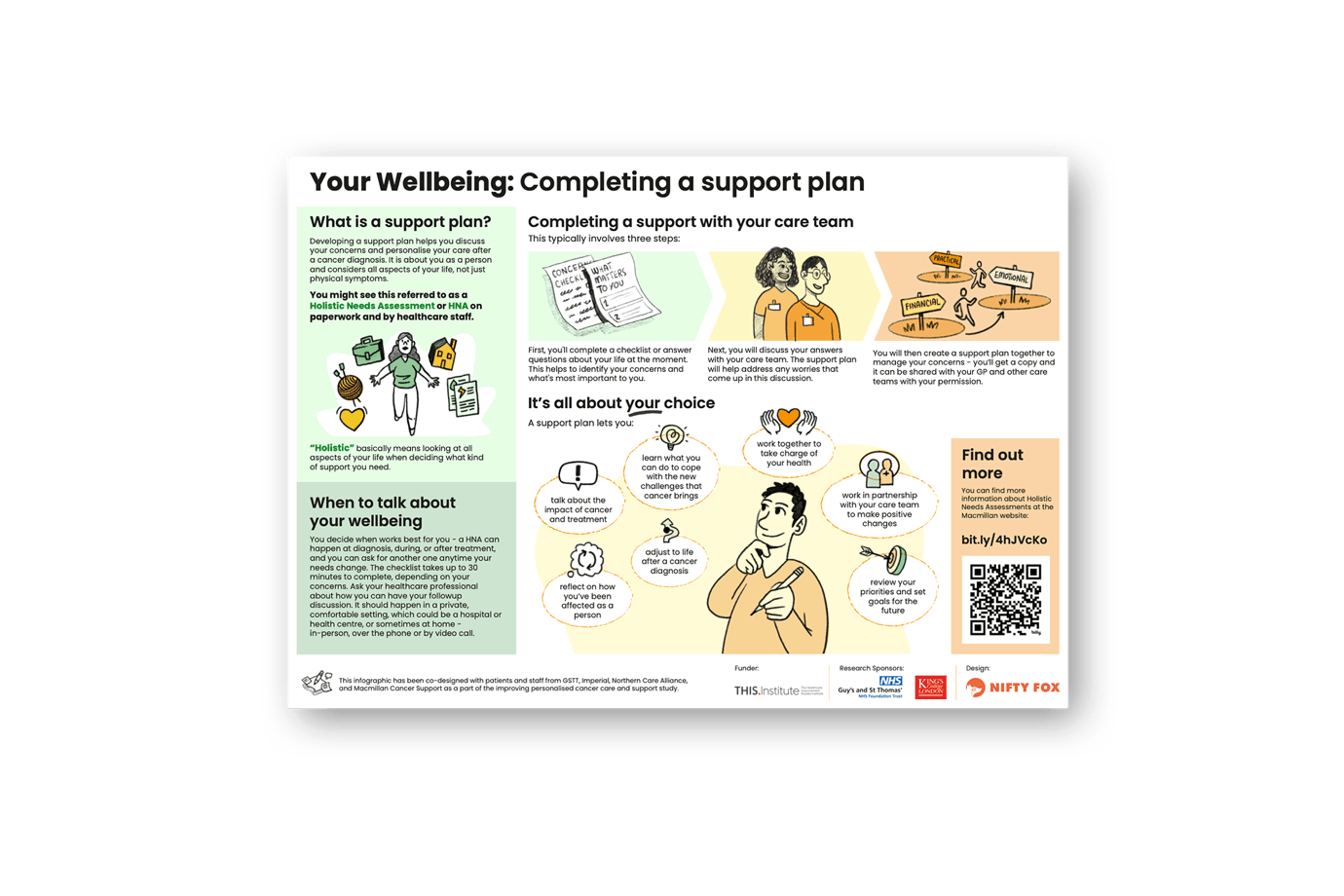
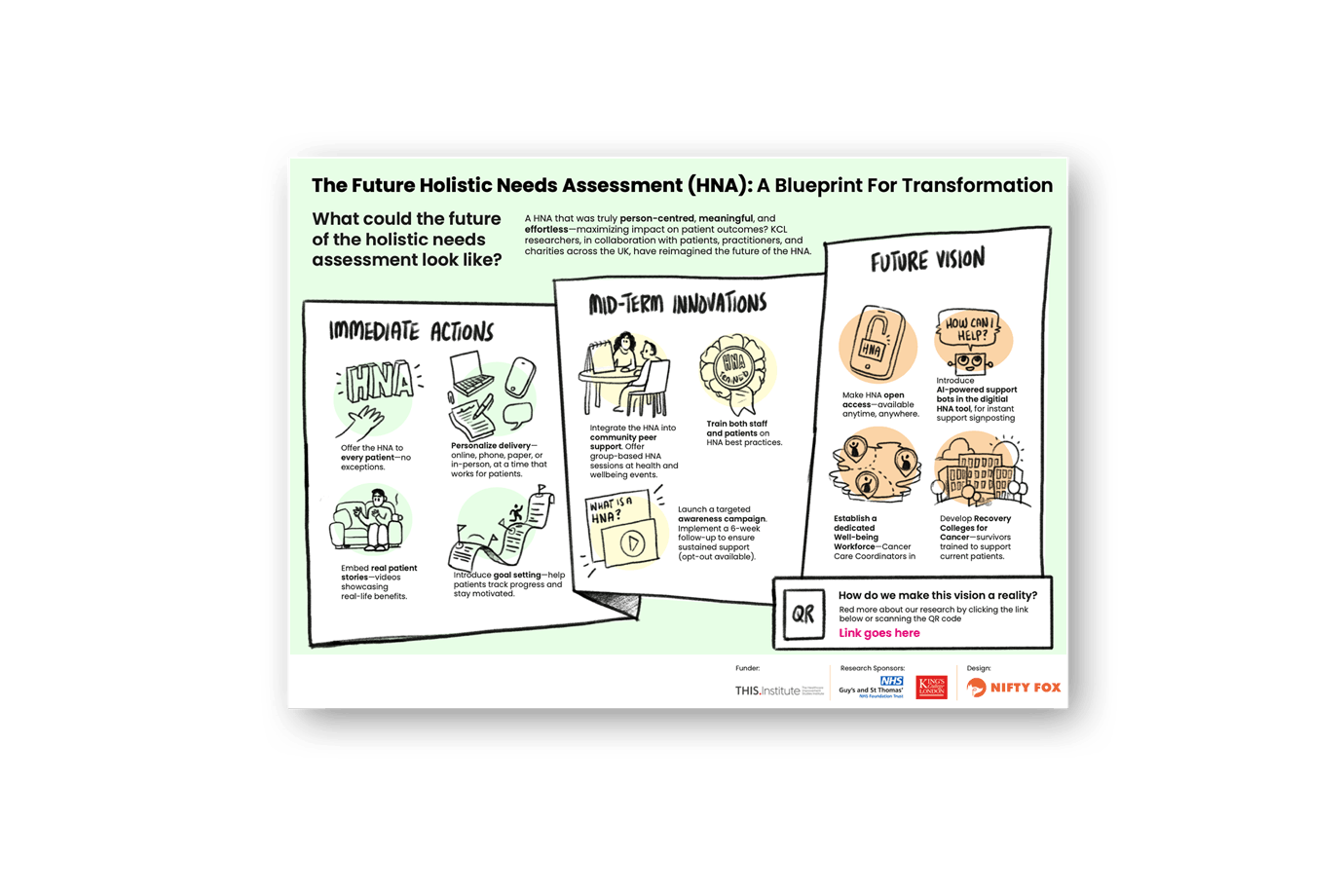
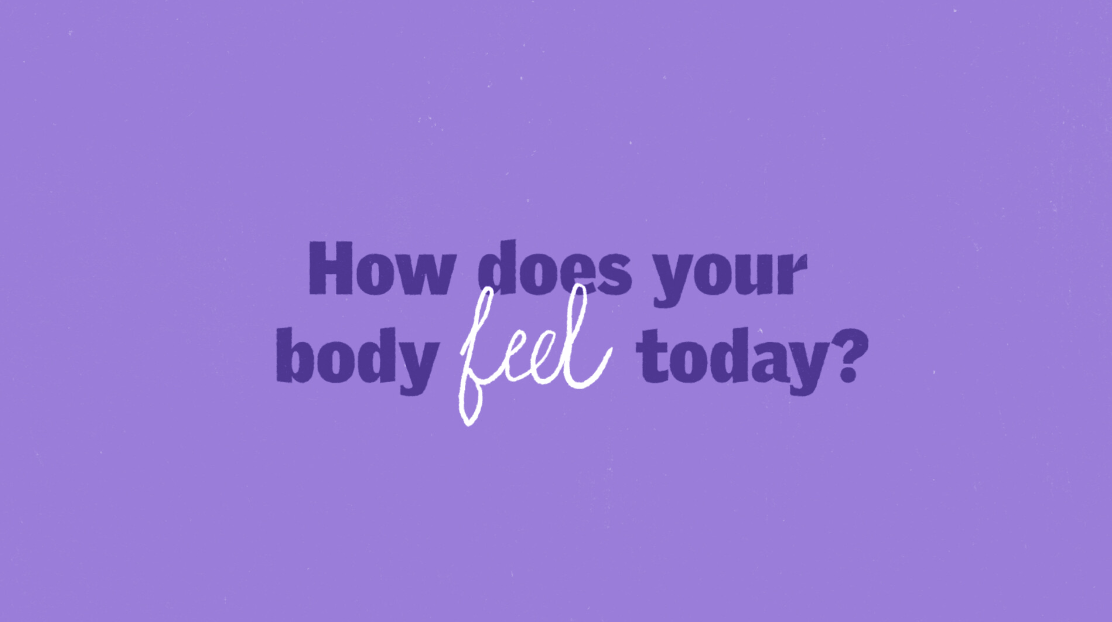
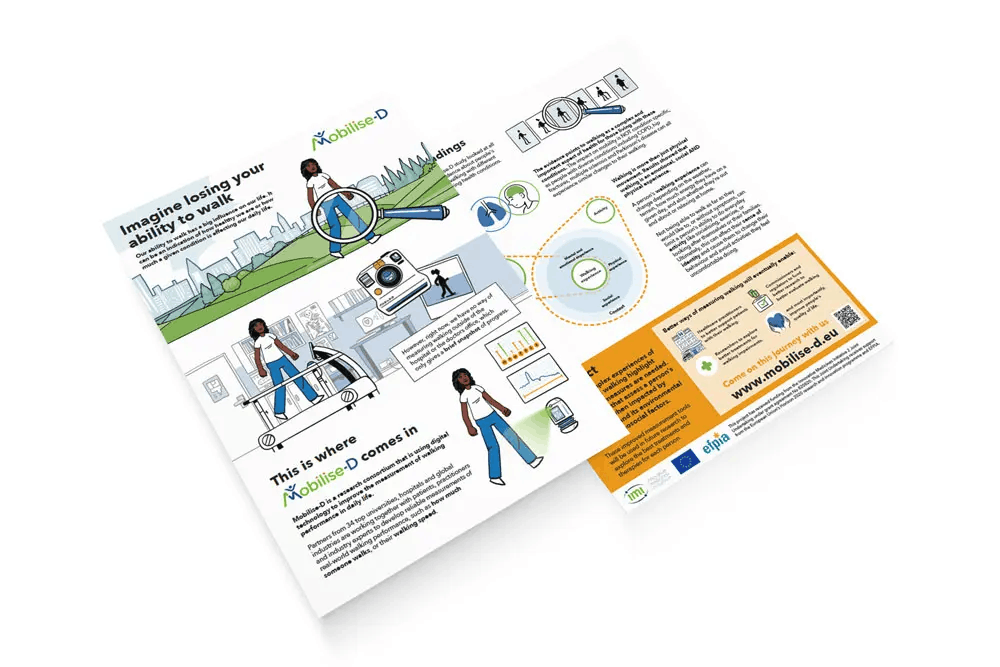
Together we produced a suite of new materials: a patient-voiced animation designed to play on hospital screens, leaflets for inclusion in cancer resource packs, and visual communications that centred patient choice and mental health alongside physical care. One of the patients from the co-design sessions provided the voiceover for the animation — meaning the final output wasn’t just created with patients, it was literally told in a patient’s voice.

Helping King’s College London, Macmillan, and four NHS Trusts co-design new mental health resources for colorectal cancer patients — now adopted nationwide and recognised with a King’s Impact Award.

One of the things that happens when you do co-design properly is that patients contribute beyond the brief. As the sessions progressed, patients identified small but important gaps in the HNA questions themselves — framings that didn’t quite reflect their mental health experience, or questions they wished had been asked. The project team took that feedback forward and successfully lobbied for tweaks to the HNA questions at a national level. This wasn’t the primary outcome of the work, but it’s a clear example of how genuine co-production produces insights you can’t get from consultation alone.

Helping King’s College London, Macmillan, and four NHS Trusts co-design new mental health resources for colorectal cancer patients — now adopted nationwide and recognised with a King’s Impact Award.

Results

The communications resources we co-created are now in national use through Macmillan and the NHS, driving uptake of the HNA tool and improving mental health support for cancer patients across the country. 


  • HNA questions updated to better reflect cancer patient mental health — informed by patient feedback from our co-design sessions
  • Won a King’s Impact Award in recognition of the project’s real-world reach
  • Co-design methodology being written up into two peer-reviewed journal articles
  • Project now being funded to apply the same co-production approach to other disease pathways

Why this matters for your work

If your research involves understanding patient experience, genuine co-production gives the people whose experience is being studied direct authorship over what gets made. That’s the difference between communications that describe support and communications that drive people to use it. And as this project shows, when you do co-production properly, the insights extend well beyond your original brief.


Want to co-produce research outputs that change practice, not just describe it?

We facilitate co-design processes where patient voices shape what gets made; and where the final outputs can become evidence in their own right.

Let’s talk about your project