University of Nottingham and UK Sports Institute
Changing how elite coaches address female athletes’ injury through an interactive exhibition and toolkit
Together Fox | Co-design, Brand & Exhibition


Changing how elite coaches address female athletes’ injury through an interactive exhibition and toolkit
Together Fox | Co-design, Brand & Exhibition

Challenge:
Groundbreaking research had reframed female athlete injury as a gendered environmental issue, not just a physiological one — but the insight needed to reach the coaches, practitioners, and policymakers who could act on it

Solution:
Co-designed a brand, website, and in-person exhibition that brought the research to life through athlete voices, poetry, original artwork, and actionable reflections for sports practitioners

Results:
Showcased at the British Academy Summer Impact Showcase; further funded to develop a national coaching tool; in active use by Olympic and elite sports practitioners
"The Nifty Fox team managed to unite different stakeholders and realise our vision when we weren't 100% sure what we needed. They were creative, innovative and helped us create something we are so proud of. The project has had an incredible reception so far."
Dr Steph Coen - University of Nottingham
Female athletes experience some sports injuries at much higher rates than men. For decades, the sports science response has focused almost entirely on physiology — different bodies, different biomechanics, different training loads. But that framing was missing something fundamental.
Research from the University of Nottingham and the UK Sports Institute was offering a genuinely new lens. Sports injury in female athletes isn’t just a physiological problem. It’s shaped by “gendered environments” — the social, cultural, and physical conditions of sport itself. How coaches communicate. How training protocols were originally designed. How facilities, equipment, and expectations were built around male athletes as the default. These environmental factors contribute directly to injury risk, performance gaps, and well-being challenges in ways that purely physiological approaches can’t address.
The research was built on in-depth interviews with 20 recently retired elite women athletes from 11 different high-performance sports — a rigorous evidence base for a new way of seeing an old issue.
But elite sport is a notoriously difficult environment to change. Coaches work under time pressure. Practitioners rely on protocols developed largely with male athletes in mind. Policymakers respond to evidence, but only if that evidence translates into clear, actionable decisions. A journal article wasn’t going to shift practice at Olympic level — not because the science wasn’t strong enough, but because the people who needed to apply it don’t work in research papers. The team at Nottingham and UKSI needed something that carried the research findings with the gravity they deserved, honoured the athletes who’d shared their experiences, and gave coaches and practitioners something concrete to work with.
This was a multi-stakeholder co-production from the outset. We ran discovery sessions with academic researchers, sports practitioners, policy stakeholders, and athletes themselves to build the project together from its foundations.
The first thing we co-created was the name. “More Than Medals” came directly from an athlete quote during those early sessions. That choice was deliberate. Naming the project from an athlete’s own words set the tone for everything that followed — this wasn’t research about female athletes, it was research with them, told in their voices.
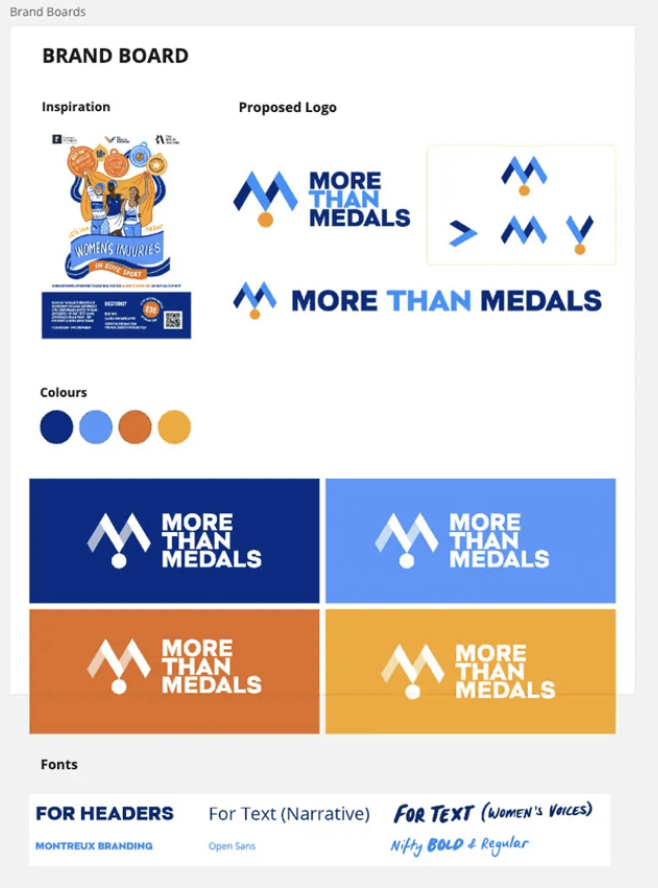
From there, we worked across multiple formats to reach the different audiences the research needed to land with. A brand that felt credible to researchers and engaging to practitioners. A website that balanced the accuracy and gravity of the findings with the practical, actionable tone coaches need. An in-person exhibition that could travel to conferences, training environments, and policy events. And a multimedia experience that made the research feel human.
The exhibition itself is structured around five gendered environmental challenges identified in the research. Each “room” takes visitors through a specific challenge and ends with reflection prompts designed to turn insight into action. The genuinely innovative element is how the stories are told: each room features an original poem constructed entirely from direct quotes from the athletes themselves, voiced by actors and illustrated through original artwork. Visitors can look, listen, or read along — choosing the mode that works for them.
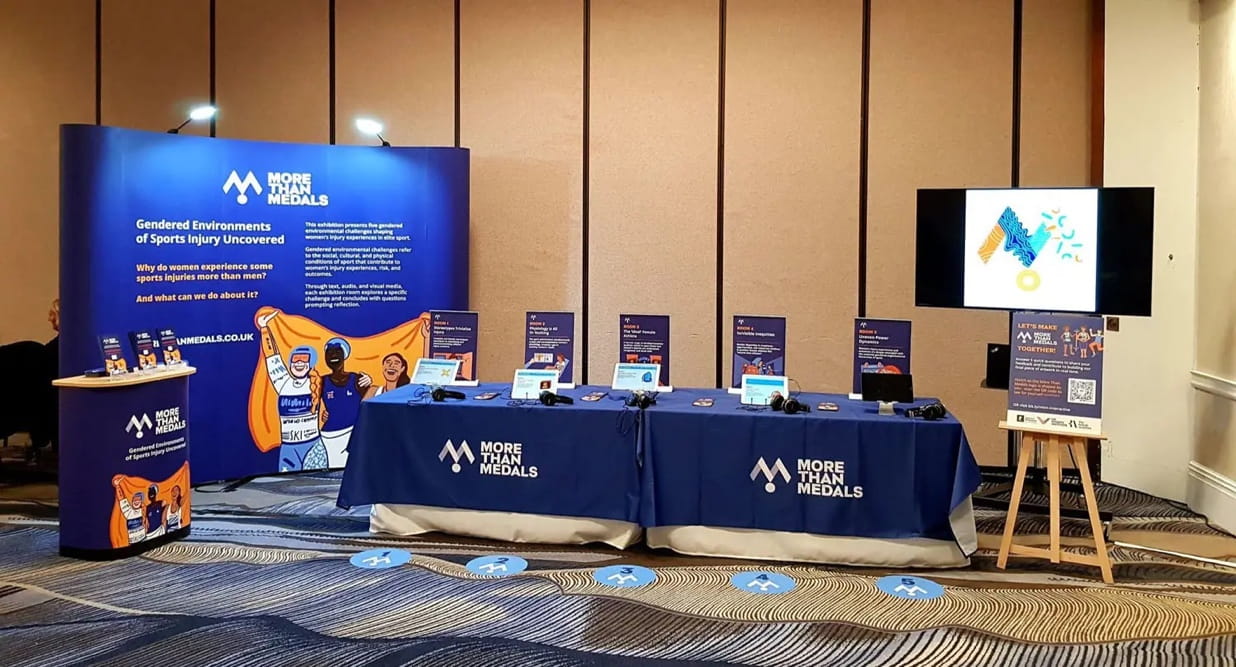
That decision — building narratives from real athlete quotes, arranged as poetry — came from the co-production process. It solved two problems at once. It preserved the authenticity and gravity of the athletes’ experiences, and it gave coaches, practitioners, and policymakers a way into the research that didn’t feel like an academic lecture. You can’t ignore someone’s words when they’re arranged in front of you, in their own voice.
Every creative and strategic decision was co-approved with the project team. We developed web stylescapes and sketches for sign-off, and wrote web copy that had to do the difficult job of feeling both engaging and practical — serious enough to honour the research, actionable enough to change behaviour.
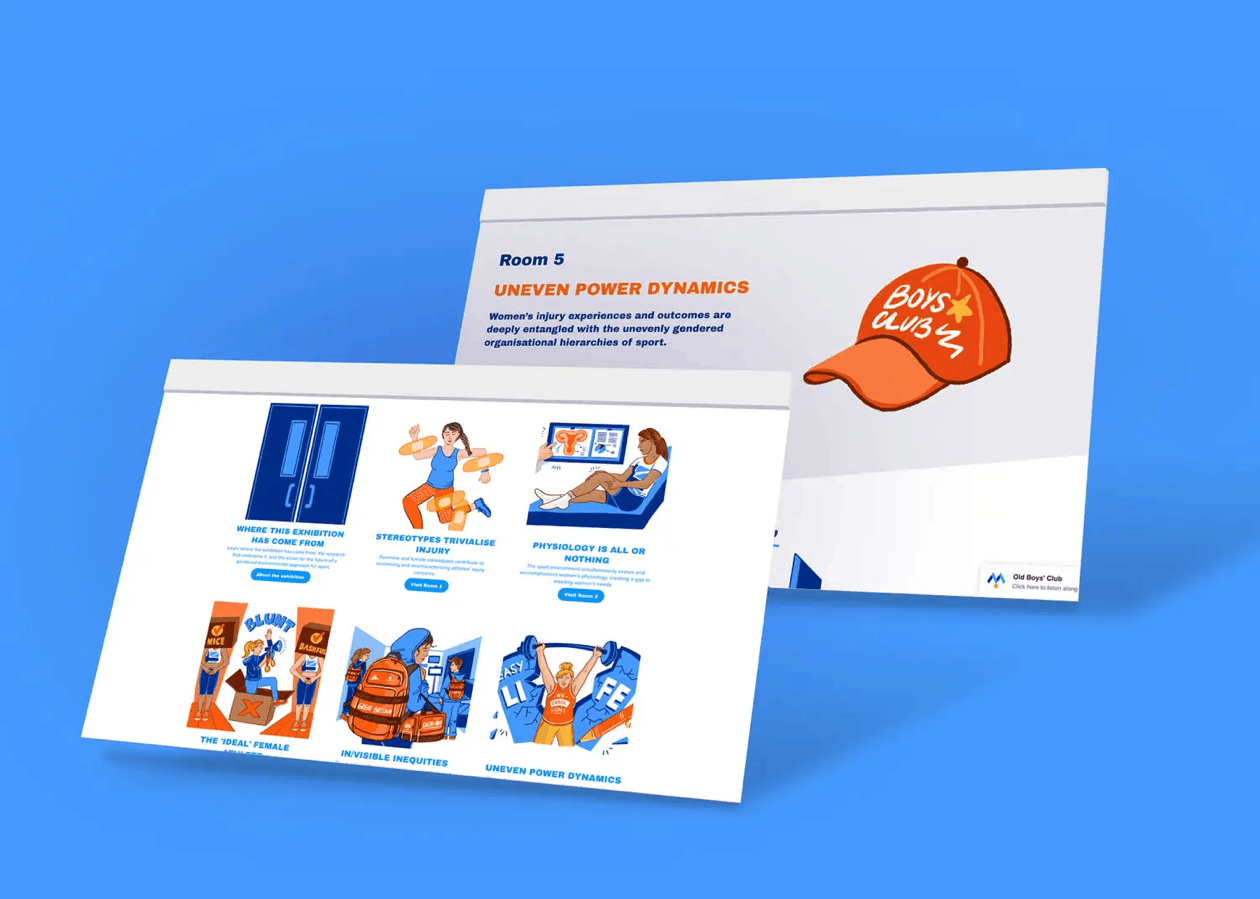
More Than Medals is now being used by Olympic and elite coaches, UK Sports Institute practitioners, and policymakers to rethink how they support female athletes.
If your research offers a new lens on an old problem — particularly one where the existing framing is deeply embedded in professional practice — the format of your dissemination matters as much as the strength of your findings. Reframes don’t land through papers alone. They land when practitioners can feel the difference between the old way of seeing and the new way, through voices they recognise and reflections they can act on. And when you build the dissemination as an ecosystem — exhibition, website, workshop tool — you create the conditions for a new framing to change what people do, not just what they know.
We design multimedia experiences and training tools that move research from a new idea into embedded practice.